

In modern manufacturing, controlling mold temperature with precision is more than just a process requirement—it’s a decisive factor in product quality, production speed, and energy efficiency. Choosing between a water mold temperature controller (MTC) and an oil mold temperature controller (MTC) isn’t simply about temperature range; it involves evaluating resin types, mold complexity, cycle times, and cooling strategies. Making the wrong choice can lead to inconsistent parts, longer production cycles, or unnecessary energy consumption.
Key Differences Between Water and Oil MTCs
For a detailed comparison of these two types of controllers, you can refer to our in-depth article: The Differences Between Oil Mold Temperature Machines And Water Mold Temperature Machines
1. Water Mold Temperature Controllers: Suitable for temperatures up to 180°C
2. Oil Mold Temperature Controllers: Can reach temperatures up to 400°C
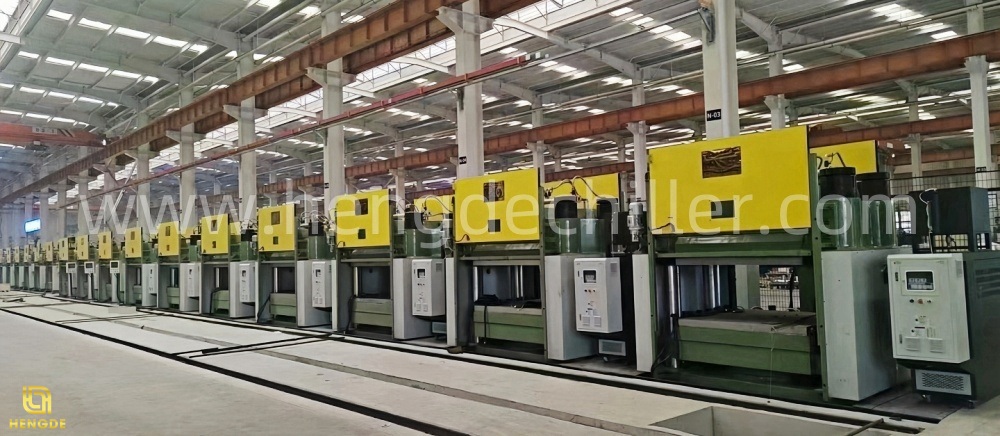
Considering Cooling Methods
The choice of a water or oil MTC is also closely linked to the cooling method used. For more insights, check: Direct vs. Indirect Cooling: Which Mold Temperature Controller Method is Best for Your Mold?
FAQs on Water mold temperature controllers vs. Oil mold temperature controllers
Q1: Which mold temperature controller is more energy-efficient?
Water mold temperature controllers are generally more energy-efficient for low to medium temperature applications, while oil mold temperature controllers are better for high-temperature resins where precise stability is critical.
Q2: How do I choose the right MTC for a high-performance resin like PEEK or PEI?
High-performance resins that require temperatures above 200°C typically need an oil mold temperature controller for optimal flow and dimensional stability.
Q3: What maintenance considerations should I be aware of?
Water MTCs need regular cleaning to prevent scaling, while oil MTCs require monitoring for oil aging and periodic replacement to maintain efficiency.
Q4: Does the mold size affect the choice between water and oil MTCs?
Yes. Large molds or molds with complex cavities benefit from oil mold temperature controllers (MTCs) with indirect cooling for uniform temperature control, whereas smaller molds can efficiently use water mold temperature controllers (MTCs) with direct cooling.
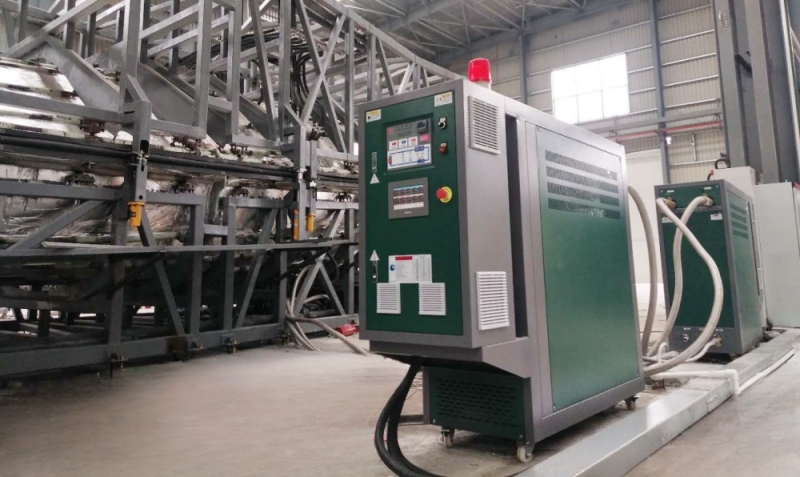
Choosing the Right MTC
Selecting between water mold temperature controllers and oil mold temperature controllers depends on your production needs, resin type, mold size, and cooling method. Considering these factors carefully ensures stable mold temperature, consistent product quality, and optimized cycle times.
About Nanjing Hengde
Nanjing Hengde specializes in designing and manufacturing mold temperature controllers (MTCs), including water mold temperature controllers and oil mold temperature controllers, delivering reliable temperature solutions to manufacturers worldwide, including Germany, Brazil, Japan, and Australia. Hengde mold temperature controllers (MTCs) are engineered for precision, stability, and long-term operation in demanding production environments.
WhatsApp : +8618351969707
Email : sales@sinohengde.com
Address : No.1 Jiangyang Line, Hongqi community, Hengxi Street,Jiangning, Jiangsu, China