Choosing the right size of an industrial chiller is not as simple as picking a model based on horsepower. A chiller that is too small may never reach the required water temperature, while a unit that is much larger than necessary can increase the purchase price and operating cost.
For manufacturers, the real question should be: How much heat does my production process actually need to remove? This is the starting point for selecting the right industrial chiller.
Cooling Capacity Comes First
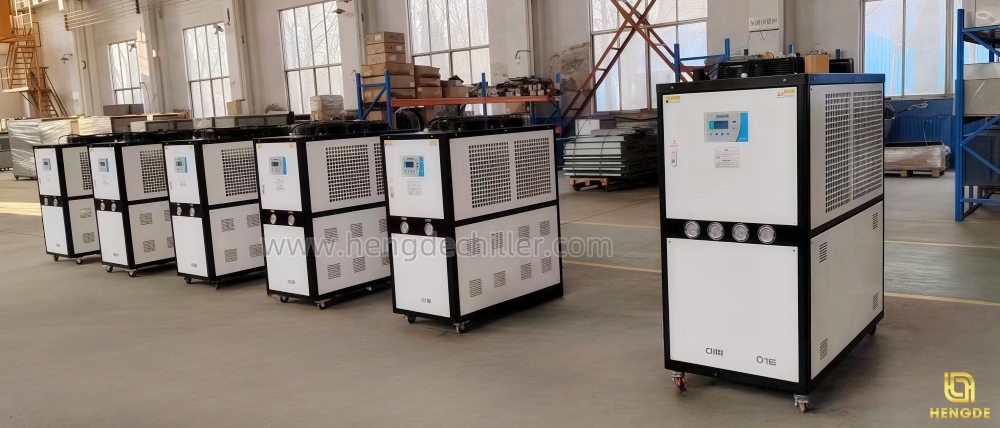
Industrial chiller capacity is commonly expressed in kW, kcal/h, or tons of refrigeration (TR). The required capacity depends mainly on the amount of heat generated by the equipment and how quickly that heat needs to be removed.
For water-based cooling systems, a basic calculation can be made using water flow and temperature difference: Here, Q represents the approximate cooling load, F is the water flow rate, and ΔT is the temperature difference between the return and supply water.
This calculation provides a useful starting point, but it is not the whole story. Actual industrial chiller sizing also depends on ambient temperature, operating conditions, piping, pump performance, heat losses, and whether the equipment operates continuously.
Don't Choose a Chiller Based Only on Horsepower
One of the most common mistakes we see is a customer saying, "I have a 100 HP machine, so I need a 100 HP chiller." There is no direct one-to-one relationship between equipment horsepower and chiller capacity.
Two machines with the same motor power can generate very different amounts of heat. The actual cooling requirement depends on the production process, load, cycle time, material, operating temperature, and how much heat is transferred into the cooling water.
This is particularly important in plastic injection molding, extrusion, chemical processing, and other applications where the cooling load can change significantly during production.
Hengde Insight: Horsepower tells you about the size of the production equipment, not necessarily the size of the cooling load. For chiller selection, process data is usually more valuable than simply knowing the machine's motor power.
Water Temperature Is Just as Important as Cooling Capacity
A customer may know that they need a 50 kW chiller, but that information alone is still incomplete. The supplier should also know the required chilled-water temperature.
For example, producing 7°C water is considerably different from supplying 15°C or 20°C cooling water. The lower the target temperature, the more demanding the refrigeration system becomes.
It is also important to know the expected return-water temperature and required water flow rate. These values help the manufacturer determine whether the proposed industrial chiller can provide the required cooling performance under actual operating conditions.
Don't Forget the Ambient Temperature
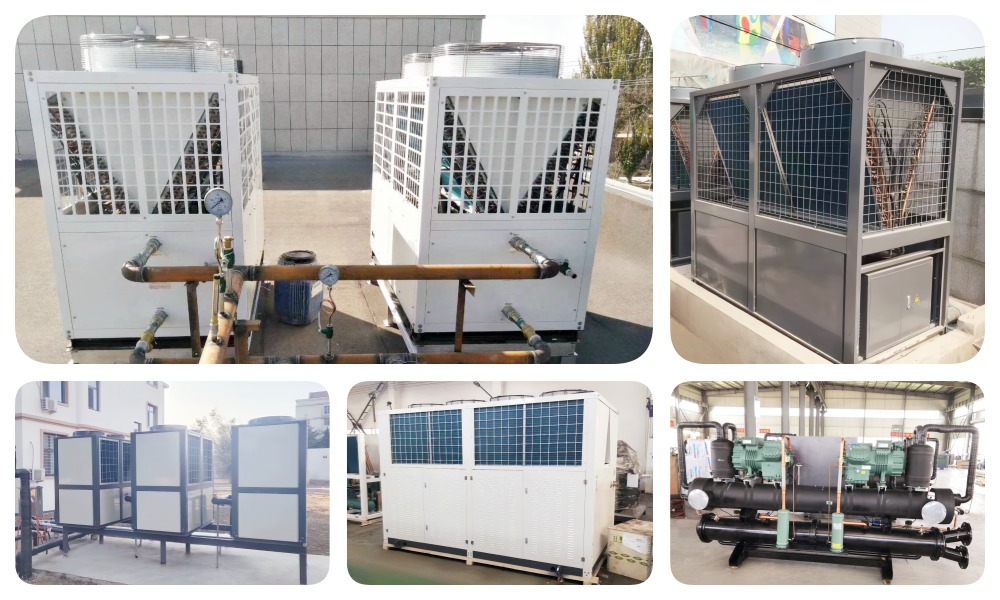
For air-cooled industrial chillers, ambient temperature has a direct impact on refrigeration performance. A chiller operating in a factory where the summer temperature reaches 40°C faces very different conditions from the same model operating in a 25°C environment.
This is especially important for customers in hot regions such as Southeast Asia, the Middle East, Africa, and parts of South America.
Hengde Insight:A chiller model should not be judged only by its catalog cooling capacity. The more useful question is: At what ambient temperature and water temperature is that capacity achieved?
This is one reason why two suppliers can quote similar-sized chillers while offering different actual performance.
How Much Safety Margin Do You Need?
Some additional capacity is normally sensible because production conditions are rarely perfectly stable. However, bigger is not always better.
A customer may add a very large safety margin because they are worried that the chiller will be insufficient. But an oversized industrial chiller can lead to higher initial costs and inefficient operation, particularly when the actual cooling load is much lower than the machine's rated capacity.
A reasonable reserve should be based on the application rather than an arbitrary percentage.
Hengde Insight: "Buy a bigger chiller just to be safe" is not always good engineering advice. A properly calculated chiller with a reasonable reserve is usually a better investment than a machine that is significantly oversized.
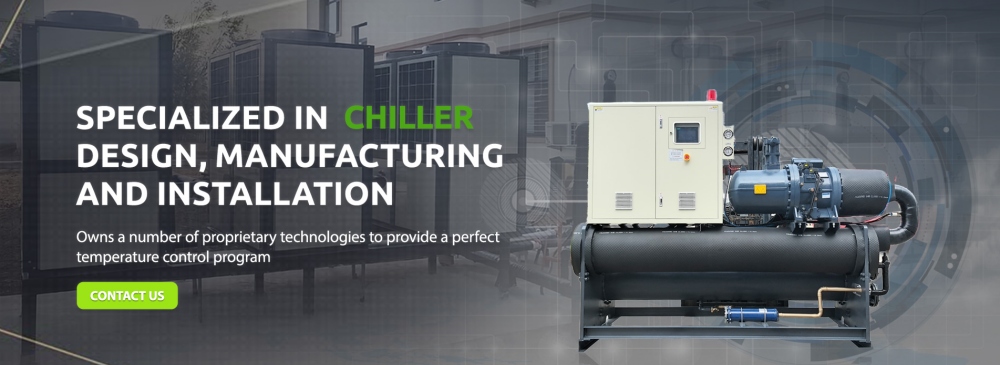
Air-Cooled or Water-Cooled?
The cooling method should also be considered when selecting the chiller size.
For larger cooling loads, water-cooled systems can offer excellent efficiency, but the complete system—including the cooling tower and water treatment—should be considered when calculating the project cost.
For more details, please refer to this article by Hengde: Choosing Between Air Cooled And Water Cooled Chillers: Which One Is Right For You?
What Information Should You Give the Supplier?
If you are requesting an industrial chiller quotation, providing the following information will make the selection much more accurate:
If you don't know the required cooling capacity, that's not necessarily a problem. A professional industrial chiller manufacturer should be able to estimate the load from your process information.
How Hengde Can Help
Hengde specializes in industrial chiller solutions for production lines, providing air-cooled and water-cooled chillers for plastic processing, chemical production, electroplating, food processing, lithium battery manufacturing, and other industrial applications.
Our engineering team does not simply select a model according to horsepower. We look at the customer's actual process, required water temperature, flow rate, ambient conditions, and installation environment before recommending a suitable industrial chiller.
For customers who are unsure about the required size, providing the production equipment information and cooling requirements is usually enough for Hengde to make a preliminary assessment.
Final Thoughts
There is no universal answer to the question, "What size industrial chiller do I need?" The correct size depends on the actual cooling load, required water temperature, flow rate, ambient conditions, and production process.
For buyers and engineers, the best approach is to give the chiller manufacturer complete process information rather than selecting a model simply by horsepower.
The goal is not to buy the biggest industrial chiller available. It is to choose a industrial chiller that can reliably handle the real cooling load while maintaining stable operation and reasonable energy consumption.
WhatsApp : +8618351969707
Email : sales@sinohengde.com
Address : No.1 Jiangyang Line, Hongqi community, Hengxi Street,Jiangning, Jiangsu, China