Many manufacturers spend weeks comparing prices before purchasing a Mold Temperature Controller. Ironically, price is often the easiest part of the decision.
What really determines whether a temperature control system performs well is how accurately it matches the production process. A Mold Temperature Controller that works perfectly in one factory may struggle in another, even if the products appear similar.
After working with manufacturers from different industries, we've noticed that the questions customers ask before purchasing are changing. Instead of asking only about heating capacity or delivery time, more companies want to know how the equipment will perform after several years of continuous operation.
This article shares several practical considerations that are often overlooked during the purchasing process.
Don't Start with the Machine—Start with the Process
One of the most common purchasing mistakes is selecting a machine based only on mold size.
A mold is only one part of the temperature control system. The actual heat load depends on many factors, including material type, production cycle, mold structure, operating temperature, and even the surrounding workshop environment.
For example, two injection molding factories may use molds of similar dimensions, but one processes engineering plastics at over 180°C while the other produces consumer products at much lower temperatures. Their Mold Temperature Controller requirements can be completely different.
Hengde Unique Insight:Many buyers focus on the mold dimensions, but experienced engineers usually pay more attention to the amount of heat entering and leaving the mold during each production cycle. That determines the real heating demand.
A Larger Machine Isn't Always a Better Investment
Some buyers intentionally choose a larger Mold Temperature Controller, believing extra capacity provides additional safety.
In reality, oversizing is not always beneficial.
A heating system that is significantly larger than required may reach the target temperature quickly but spend more time cycling on and off. Frequent temperature fluctuations can reduce control stability and increase unnecessary energy consumption.
Choosing equipment with appropriate capacity usually provides more stable long-term performance than simply choosing the biggest model available.
Think Beyond Today's Production
Factories evolve.
New molds are added, production schedules change, and different materials are introduced.
When purchasing a Mold Temperature Controller, it's worth asking whether the system can be adapted to future production requirements. Expansion capability, communication options, and maintenance accessibility often become much more important after the equipment has been installed for several years.
Hengde Unique Insight: Many companies replace Mold Temperature Controllers not because they fail, but because the original specifications no longer match changing production requirements.
Temperature Stability Is More Valuable Than Maximum Temperature
Manufacturers often compare the maximum operating temperature listed in product catalogs. While maximum temperature is important, stability is usually more critical.
Maintaining 180°C continuously with minimal fluctuation is often more valuable than reaching 200°C briefly.
Stable temperature control improves product consistency, reduces scrap rates, and shortens production adjustments after mold changes.
This is especially true in precision injection molding, die casting, and composite material processing.
Maintenance Should Be Part of the Buying Decision
Maintenance is rarely discussed before a purchase, yet it has a direct impact on operating costs.
Simple details such as filter accessibility, pump replacement, thermal oil drainage, electrical layout, and spare part availability can significantly influence future downtime.
Some manufacturers discover only after installation that routine servicing requires stopping an entire production line.
Hengde Unique Insight:The easiest machine to maintain often becomes the least expensive machine to own—even if its purchase price wasn't the lowest.
Don't Ignore the Quality of Components
A Mold Temperature Controller is assembled from many individual components.
Heating elements, circulation pumps, contactors, temperature sensors, expansion tanks, and controllers all contribute to long-term reliability.
Many experienced buyers pay close attention to component brands because they know replacement parts and service availability become increasingly important as equipment ages.
Reliable components also improve operational stability under continuous industrial use.
Communication Before Purchase Matters More Than the Quotation
A detailed quotation is useful, but good technical communication is even more valuable.
Before recommending a model, a professional manufacturer should ask questions about:
If very few technical questions are asked, there is a greater chance the recommendation is based on assumptions rather than actual production requirements.
Hengde Unique Insight:The quality of a supplier can often be judged by the questions they ask before providing a quotation.
How Hengde Can Help
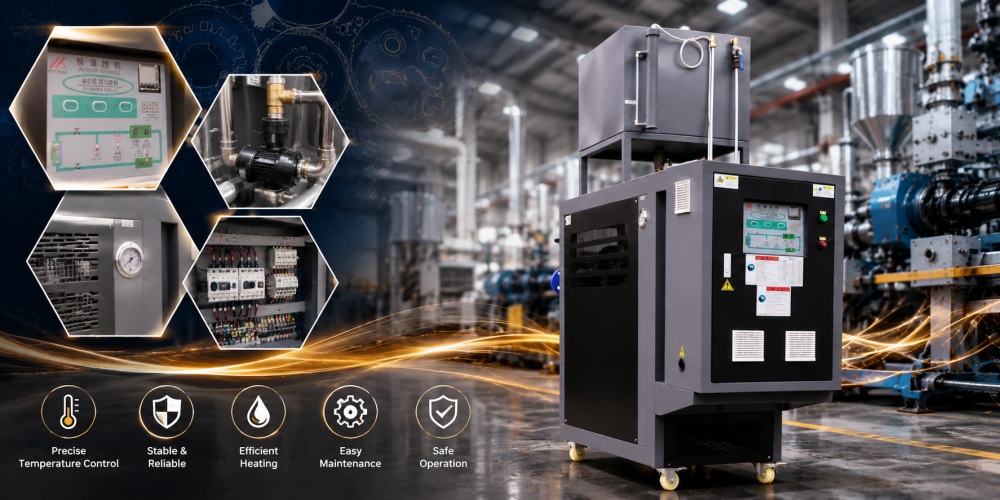
For more than 20 years, Hengde has specialized in manufacturing industrial Mold Temperature Controllers for customers worldwide.
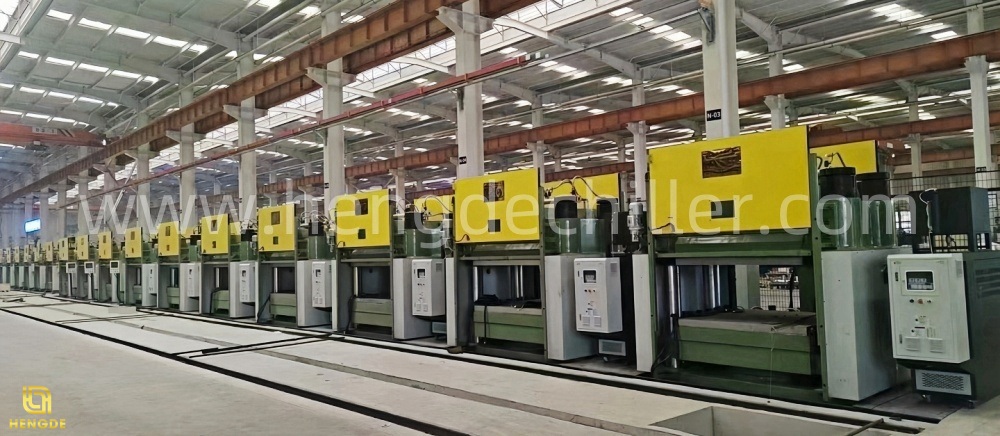
Our systems are widely used in injection molding, die casting, rubber processing, composite materials, extrusion, and many other manufacturing industries.
Rather than recommending standard models for every application, Hengde works closely with customers to understand their production process, operating temperature, installation conditions, and future expansion plans. This allows us to provide customized temperature control solutions that improve production efficiency, maintain consistent product quality, and reduce long-term operating costs.
Whether you need a standard Oil Mold Temperature Controller, a Water Mold Temperature Controller, or a fully customized temperature control system, Hengde's engineering team is ready to help you find the right solution.
Tags :
WhatsApp : +8618351969707
Email : sales@sinohengde.com
Address : No.1 Jiangyang Line, Hongqi community, Hengxi Street,Jiangning, Jiangsu, China