When buying an industrial chiller, choosing the right manufacturer can be just as important as choosing the right cooling capacity. For industrial applications, a industrial chiller is not simply a refrigeration machine. It becomes part of the production process and directly affects temperature stability, equipment performance, product quality, and operating costs.
For buyers looking for an OEM industrial chiller manufacturer, the key question is not only “How much does the chiller cost?” but also whether the manufacturer can understand the process, provide the correct configuration, customize the equipment when necessary, and support the project after delivery.
An experienced OEM industrial chiller manufacturer should be able to do more than assemble standard components. A reliable supplier should help you determine the required cooling capacity, water temperature, flow rate, pump head, condenser type, compressor configuration, power supply, and control requirements.
For standard production lines, an off-the-shelf industrial chiller may be sufficient. However, applications involving high ambient temperatures, low-temperature cooling, corrosive environments, explosion-proof requirements, unusual power supplies, or large flow rates may require a customized solution.
Hengde Insight:In our experience, the cheapest chiller is rarely the cheapest solution over its entire service life. A slightly higher initial investment in the correct configuration can often reduce temperature problems, maintenance work, and unexpected production downtime.
Not every company selling industrial chillers is an actual manufacturer. Some companies mainly purchase standard units from other factories and resell them. This can make communication more complicated when the project requires technical modifications.
A genuine OEM manufacturer should normally have its own production, engineering, testing, and quality-control capabilities. It should also be able to explain why a particular compressor, evaporator, condenser, pump, refrigerant, or control configuration is recommended for your application.
For industrial buyers, several areas deserve particular attention:
Before contacting an OEM industrial chiller manufacturer, it is useful to prepare several basic parameters. This makes the quotation more accurate and avoids repeated technical communication.
| Parameter | Why It Matters |
|---|---|
| Cooling capacity | Determines the required refrigeration output of the chiller. |
| Water outlet temperature | Affects compressor selection and refrigeration system design. |
| Water flow rate | Ensures sufficient heat transfer between the chiller and production equipment. |
| Pump head | Must match the resistance and distance of the production-line piping. |
| Ambient temperature | Important for air-cooled chiller performance and condenser selection. |
| Power supply | Voltage, phase, and frequency must match the installation site. |
| Installation environment | Special environments may require corrosion-resistant or explosion-proof designs. |
Hengde Insight: One common purchasing mistake is to send only the machine model or horsepower to the chiller supplier. For industrial cooling, “20 HP” does not tell the manufacturer enough about the actual process. A good supplier should ask about the process before recommending the model.
| Item | OEM Manufacturer | Trading Company |
|---|---|---|
| Technical design | Usually handled by an in-house engineering team | May depend on an external factory |
| Customization | More flexible | Depends on the actual manufacturer |
| Production control | Direct control of manufacturing | Usually indirect |
| Technical communication | Direct communication with engineers is possible | Information may pass through several parties |
| After-sales support | Manufacturer-level technical support | Depends on supplier relationship |
This does not mean every trading company is unsuitable. A professional trading company can still provide good service. However, for technically demanding industrial chiller projects, direct communication with the manufacturer can reduce misunderstandings and make customization easier.
Customization does not always mean designing an entirely new chiller. In many projects, relatively small modifications can make the equipment much better suited to the production environment.
Typical requirements may include customized voltage and frequency, special water connections, larger pumps, different temperature ranges, corrosion-resistant materials, special electrical components, PLC control, RS485 communication, explosion-proof electrical configurations, or integration with an existing production line.
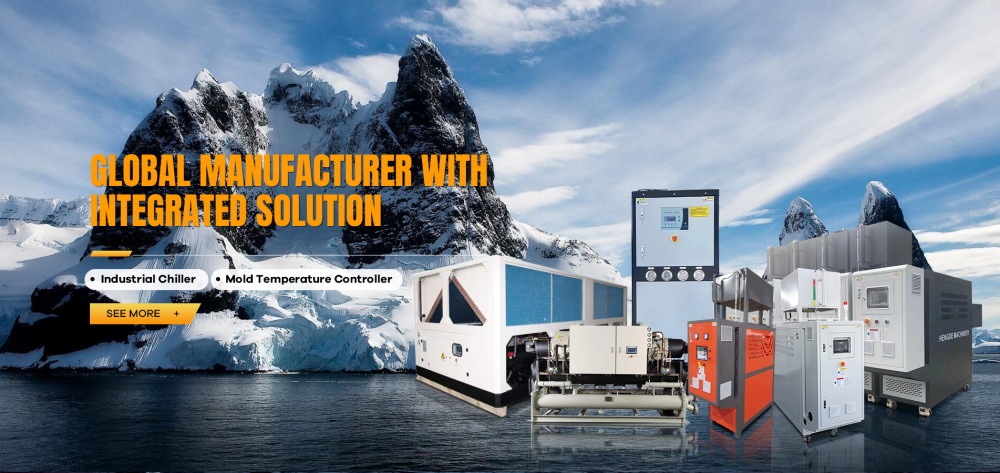
For example, Hengde offers different industrial chiller configurations including air-cooled and water-cooled models, scroll and screw chillers, as well as low-temperature units. Its product range covers applications from plastics and rubber to chemicals, electronics, food and beverage, marine, automotive, and surface treatment.
Nanjing Hengde Electrical Equipment Co., Ltd. was founded in 2010 and currently operates a 15,000-square-meter manufacturing facility with more than 150 experienced employees. The company provides industrial refrigeration and temperature-control equipment for customers in multiple industries and markets.
Every industrial chiller project has its own challenges. In one of our recent projects, the customer needed a reliable cooling solution for continuous industrial production, but the working conditions were more demanding than a standard chiller application.
The main challenge was to ensure stable cooling performance under long hours of continuous operation while meeting the customer's specific requirements for cooling capacity, water temperature, installation space, and site conditions. A standard off-the-shelf configuration could not fully match the application. Instead of simply recommending a larger chiller, our engineering team reviewed the customer's actual working conditions, including the required cooling temperature, water flow, operating hours, ambient conditions, and available installation space. Based on these details, we adjusted the chiller configuration and selected suitable core components to balance cooling performance, reliability, and operating cost.
Another challenge came during production. The customer's requirements required several details to be checked and confirmed before shipment. Our sales and engineering teams worked closely throughout the manufacturing process, checking the key parameters step by step and communicating with the customer whenever adjustments were needed.
The final industrial chiller was completed, tested, and prepared for shipment after passing the required performance checks. More importantly, the project showed that successful industrial cooling is not simply about choosing a chiller by horsepower. Understanding the customer's actual working conditions and solving problems during the design and production stages are what make a cooling solution reliable in real-world applications.
This is the kind of experience Hengde has built through years of manufacturing industrial chillers. When standard solutions are not enough, we focus on the application, identify the real problem, and work with the customer to develop a practical solution.
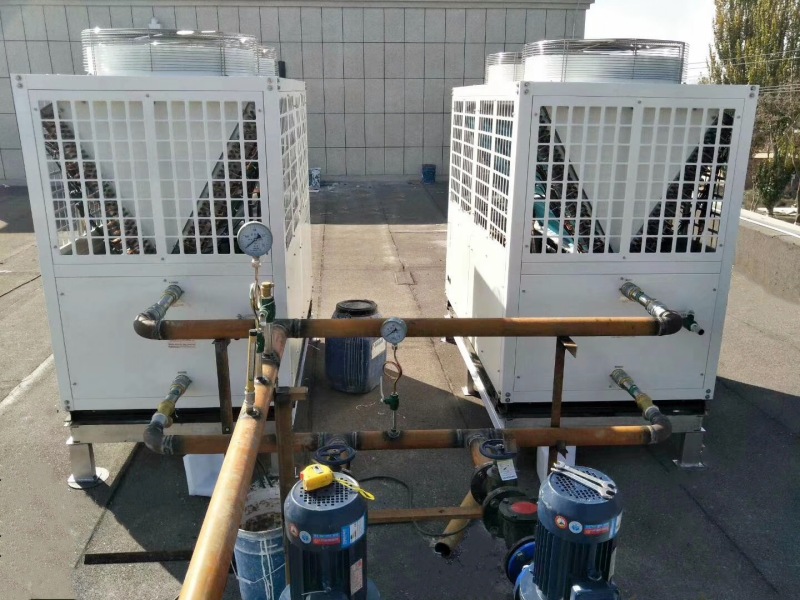
An OEM industrial chiller manufacturer designs and produces industrial cooling equipment and can normally customize equipment according to a customer's technical requirements.
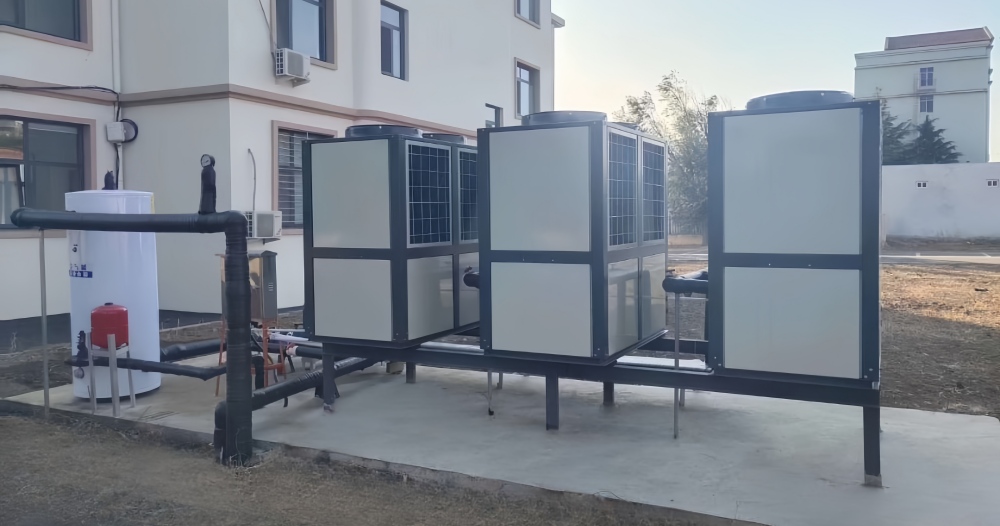
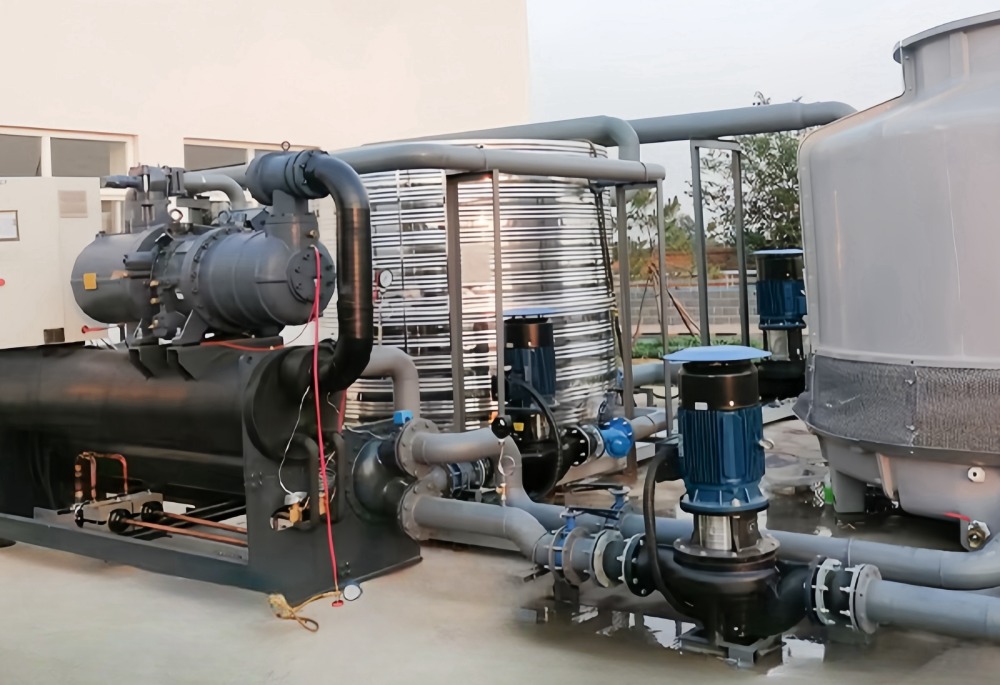
Air-cooled chillers are generally easier to install because they do not require a cooling tower. Water-cooled chillers use cooling water to remove heat from the refrigeration system and normally require a cooling tower, cooling-water pump, and related piping. The better choice depends on the plant environment, cooling load, water availability, and operating conditions.
Yes. Depending on the manufacturer, options can include power supply, temperature range, pump capacity, materials, control system, communication functions, and special environmental requirements.
Start with the actual heat load, required water temperature, water flow rate, process operating schedule, and ambient conditions. Chiller horsepower alone is not a reliable sizing method.
Ask about cooling capacity, operating temperature, water flow, pump head, power supply, compressor brand, heat exchangers, refrigerant, testing procedures, warranty, spare parts, and technical support.
Nanjing Hengde Electrical Equipment Co., Ltd. specializes in industrial refrigeration and temperature-control equipment, including scroll chillers, screw chillers, marine chillers, cold & hot integrated chiller and low temperature chillers. The company states that its products are supported by ISO9001, CE, and SGS certifications, with multiple patents and a dedicated R&D, manufacturing, testing, sales, and service structure.
For overseas buyers, the main advantage of working directly with an OEM industrial chiller manufacturer is technical communication. Instead of simply selecting a product from a catalog, Hengde can evaluate the customer's process conditions and recommend a suitable cooling solution.
If you are planning a new production line, replacing an existing chiller, or looking for a customized industrial cooling solution, you can contact Hengde with your required cooling capacity, inlet/outlet water temperature, flow rate, pump head, power supply, and application details.
WhatsApp : +8618351969707
Email : sales@sinohengde.com
Address : No.1 Jiangyang Line, Hongqi community, Hengxi Street,Jiangning, Jiangsu, China