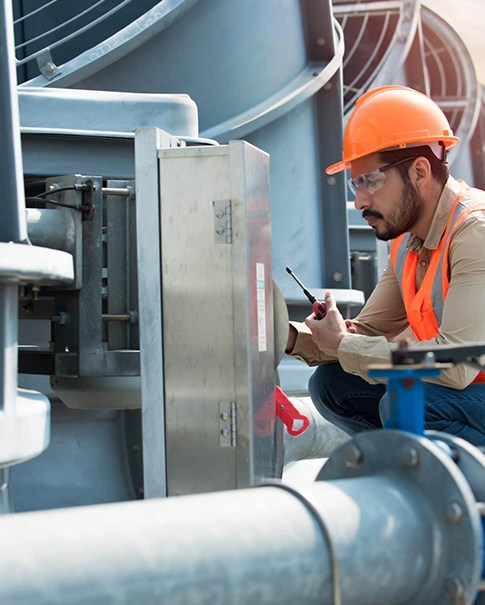
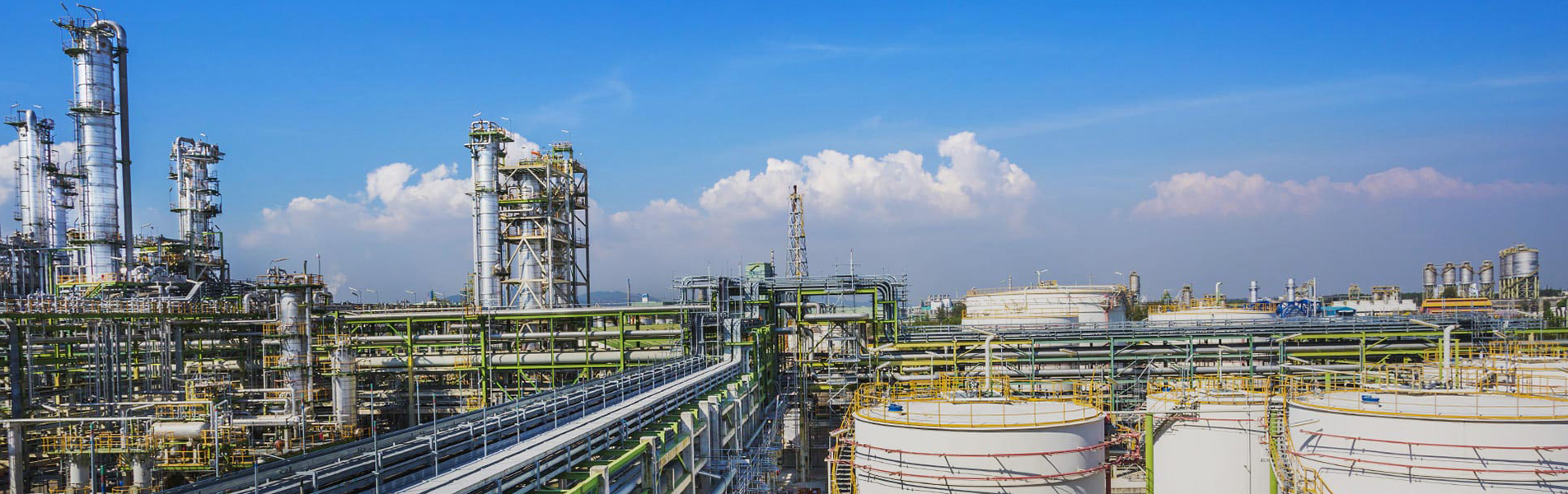
An old industrial cooling system does not always need to be completely replaced. In many factories, the real problem is that the cooling equipment has become inefficient after years of operation: compressors consume more electricity, condensers become dirty, pumps work against unnecessary resistance, and temperature control becomes less stable.
For production lines that depend on continuous cooling, upgrading the system can sometimes deliver better results than simply purchasing another oversized chiller.
This case study explains how an old industrial cooling system can be evaluated, upgraded, and optimized for lower energy consumption.
Hengde Insight:Energy saving should not start with “Which new chiller should we buy?” It should start with “Where is the existing system wasting energy?” Finding the biggest source of energy loss first usually leads to a better investment decision.
The Problem: An Old Cooling System with Rising Energy Consumption
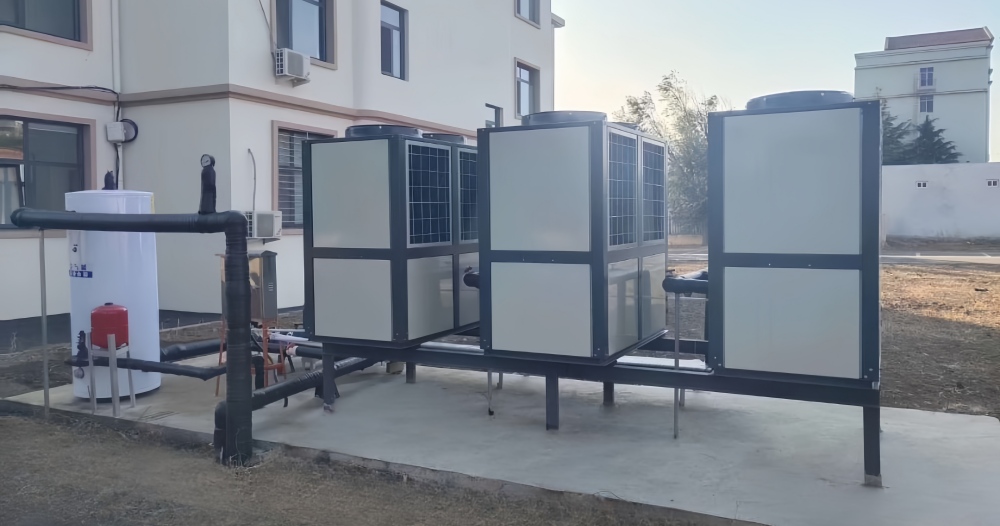
The project involved a factory using chilled water for continuous production-line cooling. The original cooling system had been operating for many years.
The equipment could still provide cooling, but the operating performance had gradually deteriorated. Our technical team noticed several problems:
Replacing the entire cooling system was considered, but the factory first wanted to understand whether the existing system could be improved.
This is an important point for technicians: an old chiller should not automatically be considered inefficient simply because of its age. Its actual operating condition should be measured before making a replacement decision.
Step 1: Measure the Existing System
Before upgrading anything, the technical team should record the actual operating data.
Useful measurements include:
| Parameter | What to Check |
| Chilled water inlet temperature | Actual process return temperature |
| Chilled water outlet temperature | Actual supply temperature |
| Water flow rate | Whether the system has sufficient circulation |
| Compressor running condition | Load and operating stability |
| Condensing temperature | Indicates heat-rejection performance |
| Pump pressure | Identifies unnecessary resistance |
| Electrical consumption | Establishes the energy baseline |
| Production load | Prevents comparison under different workloads |
The purpose is simple: know where the electricity is going before trying to save it.
For example, if the chiller is operating at only part load while the pump and cooling equipment are running at full capacity, the refrigeration system may not be the only source of energy loss.
Step 2: Check Heat Exchangers and Water Circulation
One of the most overlooked problems in an old cooling system is the water circuit.
Over time, scaling, dirt, corrosion and deposits can reduce heat-transfer efficiency. Filters can become partially blocked, while old piping may create unnecessary pressure losses.
This can force pumps and refrigeration equipment to work harder than necessary.
Cleaning the heat exchanger, checking filters, inspecting valves and verifying water flow should therefore be part of the upgrade assessment.
Hengde Insight:In industrial cooling, “energy efficiency” is not only a compressor issue. A dirty heat exchanger or poorly designed water circuit can make an otherwise efficient chiller consume more electricity.
Step 3: Match Cooling Capacity to the Real Production Load
Another common problem is an oversized cooling system. Factories sometimes select a larger chiller because they want additional capacity for future production. However, if the system spends most of its operating time at low load, the actual energy efficiency may not be as good as expected.
A better approach is to examine the production schedule.
If the cooling load changes significantly during the day, technicians should consider:
The objective is not simply to install a larger industrial chiller. It is to make the cooling capacity follow the production load.
Step 4: Upgrade the Cooling Equipment
After evaluating the existing system, the factory decided that replacing the aging refrigeration equipment was more practical than continuing with increasingly frequent maintenance.
The upgraded solution was designed around the actual production requirements rather than simply matching the old machine's horsepower. The upgrade focused on:
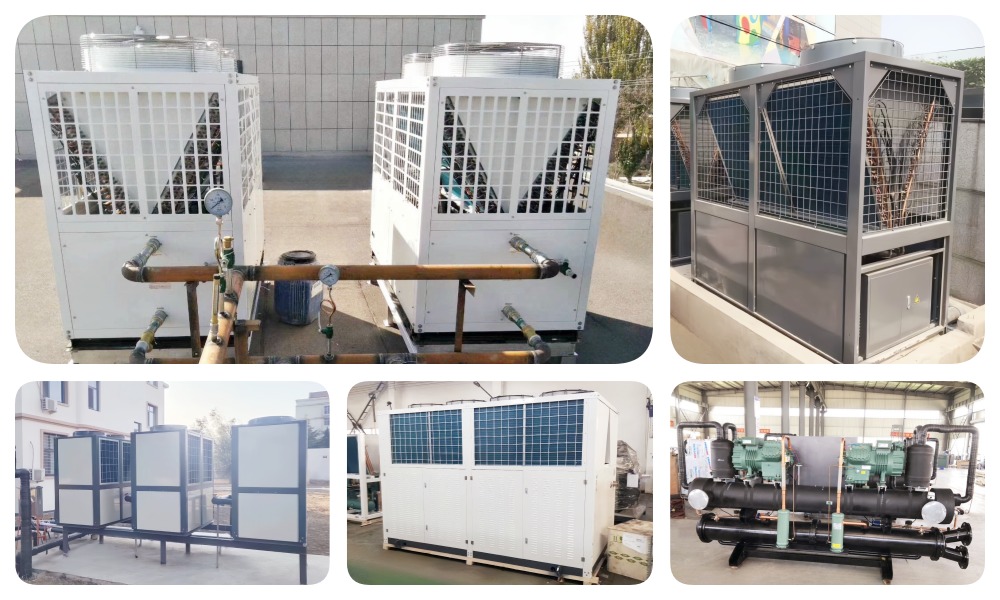
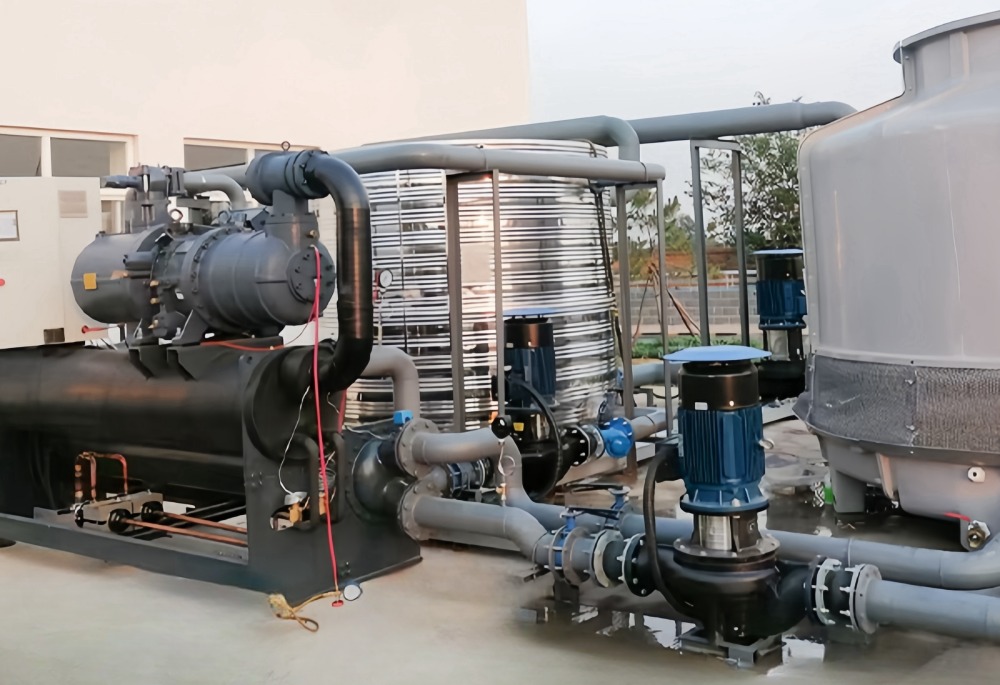
For larger industrial applications, a screw chiller can be considered when the cooling load is relatively high and continuous. For smaller or variable-load applications, scroll-type systems can offer a practical alternative.
The correct choice depends on the actual load profile rather than the nameplate capacity alone.
The Result: Saving Energy Through the Whole System
After upgrading the cooling system, the factory achieved more stable process temperatures and reduced unnecessary operation of the cooling equipment.
The most important improvement was not simply the efficiency of the new chiller. It was the optimization of the entire cooling system.
This included the chiller, pump, heat exchanger, piping, controls and production load.
That is why energy-saving projects should be evaluated as a system rather than as a single machine.
Hengde Insight:A industrial chiller upgrade should be judged by the electricity consumed per unit of production—not only by the industrial chiller's rated efficiency. A machine that consumes slightly more power but provides much better process stability may still deliver a lower overall production cost.
What Technicians Should Check Before Replacing an Old Chiller
Before recommending a new industrial chiller, technicians can use this simple checklist:
1. Measure actual cooling demand
Do not estimate the required capacity from the old chiller's horsepower alone.
2. Record electricity consumption
Establish a baseline before the upgrade.
3. Check water flow and pressure
Low flow or excessive pressure loss can reduce system efficiency.
4. Inspect heat exchangers
Scaling and contamination can seriously affect heat transfer.
5. Review the operating schedule
Understand whether the system operates at full load, partial load or highly variable load.
6. Check the control strategy
A good control system should respond to the actual production demand.
7. Compare lifecycle cost
Consider electricity, maintenance, spare parts and downtime—not only purchase price.
Upgrading an old cooling system is not simply about replacing an aging industrial chiller with a new one.
The better approach is to first understand where the existing system loses energy, then redesign the cooling capacity, water circulation and control strategy around the actual production process.
For factories operating industrial cooling systems for many years, this approach can provide a practical path toward lower energy consumption, more stable production temperatures and reduced maintenance costs.
For an experienced industrial chiller manufacturer, the value is not just supplying a new machine. It is helping the technical team determine what should be replaced, what can be retained, and what should be optimized.
WhatsApp : +8618351969707
Email : sales@sinohengde.com
Address : No.1 Jiangyang Line, Hongqi community, Hengxi Street,Jiangning, Jiangsu, China