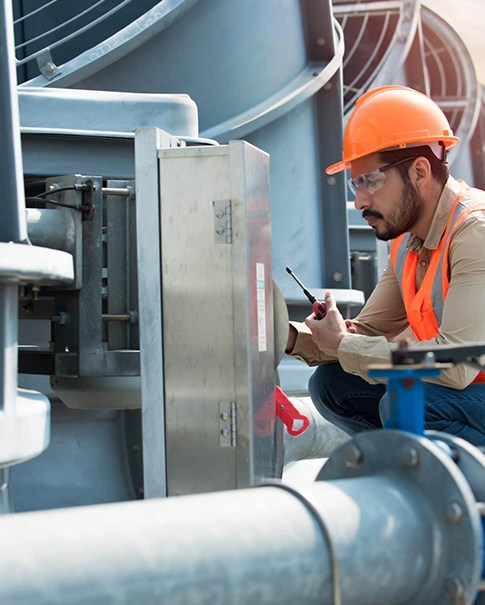
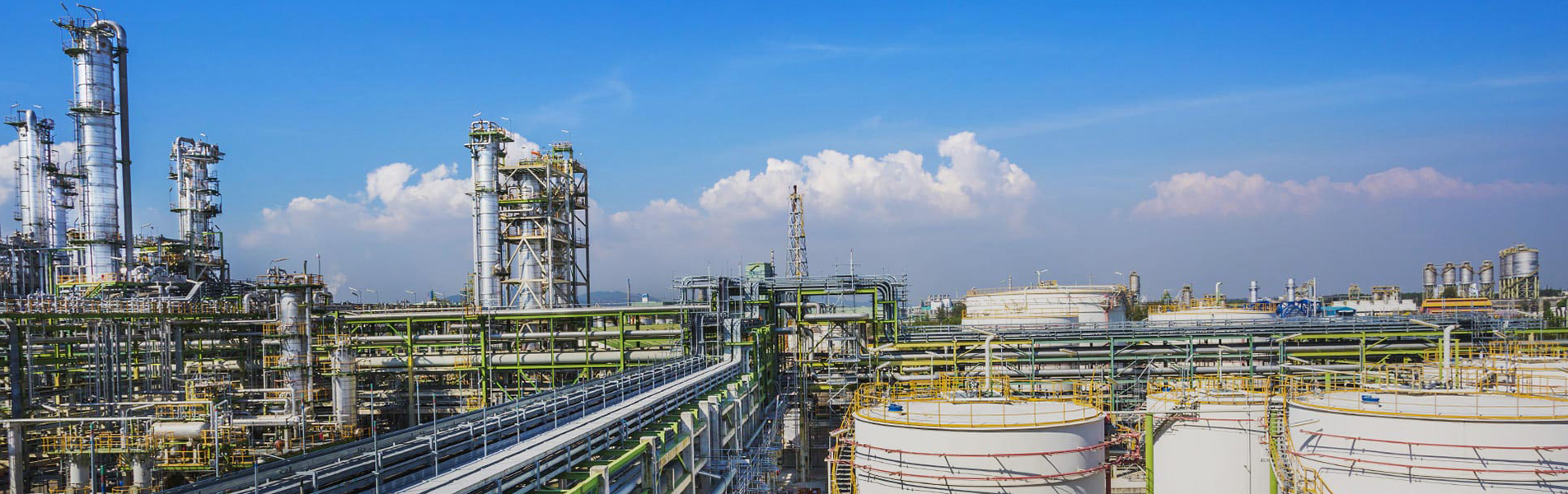
When planning a cooling system for a manufacturing plant, one question comes up repeatedly: "Should I install an industrial chiller or a cooling tower?" Although both are designed to remove heat from industrial processes, they serve very different purposes. Many first-time buyers assume they are interchangeable because both deal with circulating water, but that's one of the most common misunderstandings in industrial cooling.
The right choice depends on what your production line actually needs. More importantly, understanding how these two systems work together can help you avoid costly design mistakes and improve long-term operating efficiency.
They Remove Heat in Different Ways
An Industrial Chiller is an active refrigeration system. It uses a compressor, evaporator, condenser and expansion valve to produce chilled water at a controlled temperature. That chilled water is then circulated through production equipment such as injection molds, chemical reactors, laser machines, electroplating lines or lithium battery manufacturing equipment.
A Cooling Tower works differently. It does not create chilled water. Instead, it removes heat from circulating water by allowing a small amount of water to evaporate into the atmosphere. Because of this principle, the outlet water temperature of a cooling tower is always influenced by the outdoor wet-bulb temperature.
Simply put:
Although they both contribute to industrial cooling, they perform completely different functions.
A Water-Cooled Chiller Always Works with a Cooling Tower
One point that often causes confusion is the difference between air-cooled chillers and water-cooled chillers.
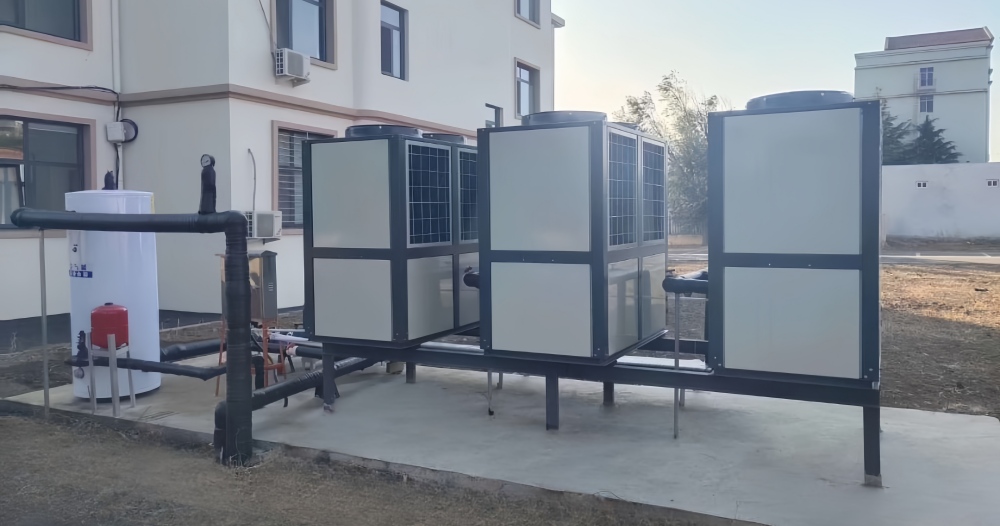
An air-cooled industrial chiller is a self-contained unit. It dissipates heat through its condenser using ambient air, so it does not require a cooling tower.
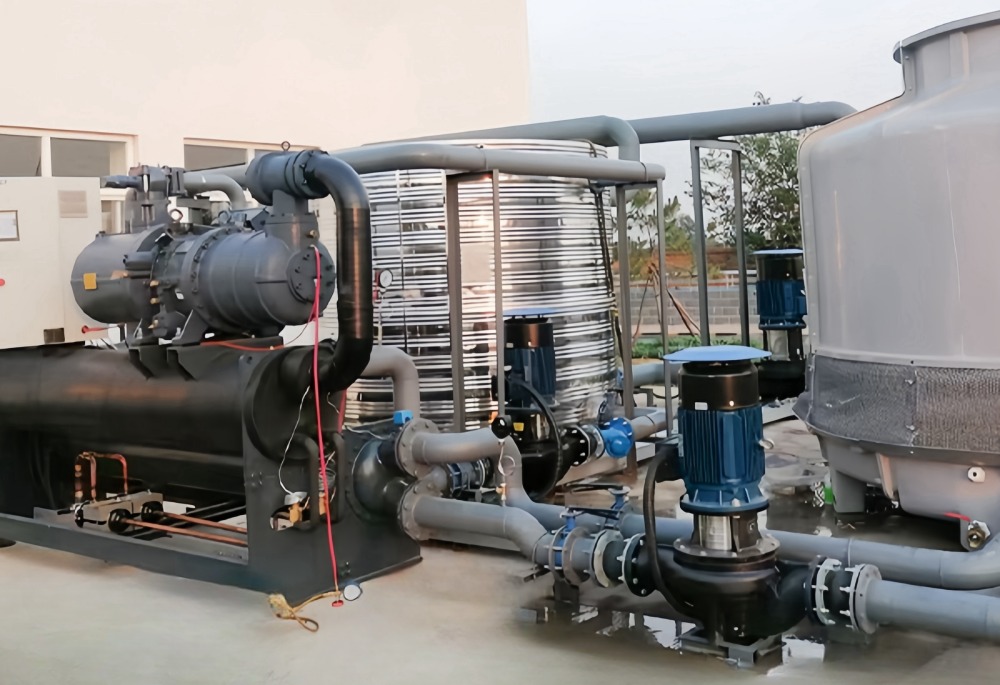
A water-cooled industrial chiller, however, cannot operate independently. It must work together with a cooling tower, condenser water pump, and the associated piping system.
In this configuration:
Many customers compare water-cooled chillers directly with air-cooled chillers based only on the chiller itself. In reality, a water-cooled system should always be evaluated as a complete engineering solution rather than as a single piece of equipment.
Hengde Original Insight: A water-cooled chiller is not simply another type of chiller—it is part of an integrated cooling system. When planning a project, manufacturers should consider the cooling tower, pumps, piping, installation space, and water treatment together instead of evaluating only the chiller itself.
Stable Temperature Matters More Than Cooling Capacity
When selecting cooling equipment, many buyers pay most attention to cooling capacity. However, in real manufacturing environments, temperature stability is often more important than maximum cooling capacity.
For example, plastic injection molding requires consistent mold temperatures to reduce dimensional variation and improve product quality. Chemical reactors depend on stable cooling to maintain reaction conditions, while lithium battery production demands precise temperature control during coating and drying processes.
A cooling tower can only cool water close to the ambient wet-bulb temperature, which changes with weather conditions.
An industrial chiller, however, can continuously maintain a preset water temperature regardless of seasonal temperature changes.
Hengde Original Insight:Manufacturers often compare cooling capacity first, but experienced engineers usually compare temperature stability. A stable cooling process generally produces fewer defects than a system with greater capacity but fluctuating temperatures.
They Are Often Partners Rather Than Competitors
Many comparison articles present industrial chillers and cooling towers as competing products. In practice, this isn't always true. Large manufacturing facilities frequently install both systems. For example, a water-cooled screw chiller used in a plastics factory may rely on a cooling tower to remove condenser heat while simultaneously providing chilled water for injection molding machines.
Instead of replacing each other, they perform different jobs within the same cooling system.
Hengde Original Insight: In many industrial projects, the question isn't "Industrial chiller or cooling tower?" The better question is "Does my cooling system require both?"
Installation and Maintenance
Installation requirements vary depending on the cooling method. Air-cooled industrial chillers are relatively simple to install because no cooling tower is required. This makes them suitable for factories with limited installation space or locations where water resources are limited.
Water-cooled chillers require additional equipment, including cooling towers, condenser water pumps, and circulating piping. Although installation is more complex, they generally provide higher efficiency for medium and large industrial cooling loads.
Cooling towers also require regular maintenance. Water treatment, scale prevention, corrosion control, and periodic cleaning are all essential for maintaining long-term cooling performance.
Ignoring water quality may reduce the efficiency of both the cooling tower and the industrial chiller connected to it.
Which System Is Right for Your Factory?
The answer depends on your production requirements.If your production line requires precise temperature control, low-temperature cooling, or year-round stable operation, an Industrial Chiller is the preferred solution. If the objective is to reject condenser heat or cool circulating water close to ambient temperature in a central cooling system, a Cooling Tower is an essential component.
For many manufacturing facilities, especially those using water-cooled chillers, the best solution is a combination of both.
Hengde Original Insight:The biggest energy loss we see in industrial cooling is rarely caused by the chiller itself. More often, it comes from choosing the wrong cooling system or selecting equipment that doesn't match the actual production process.
How Hengde Can Help
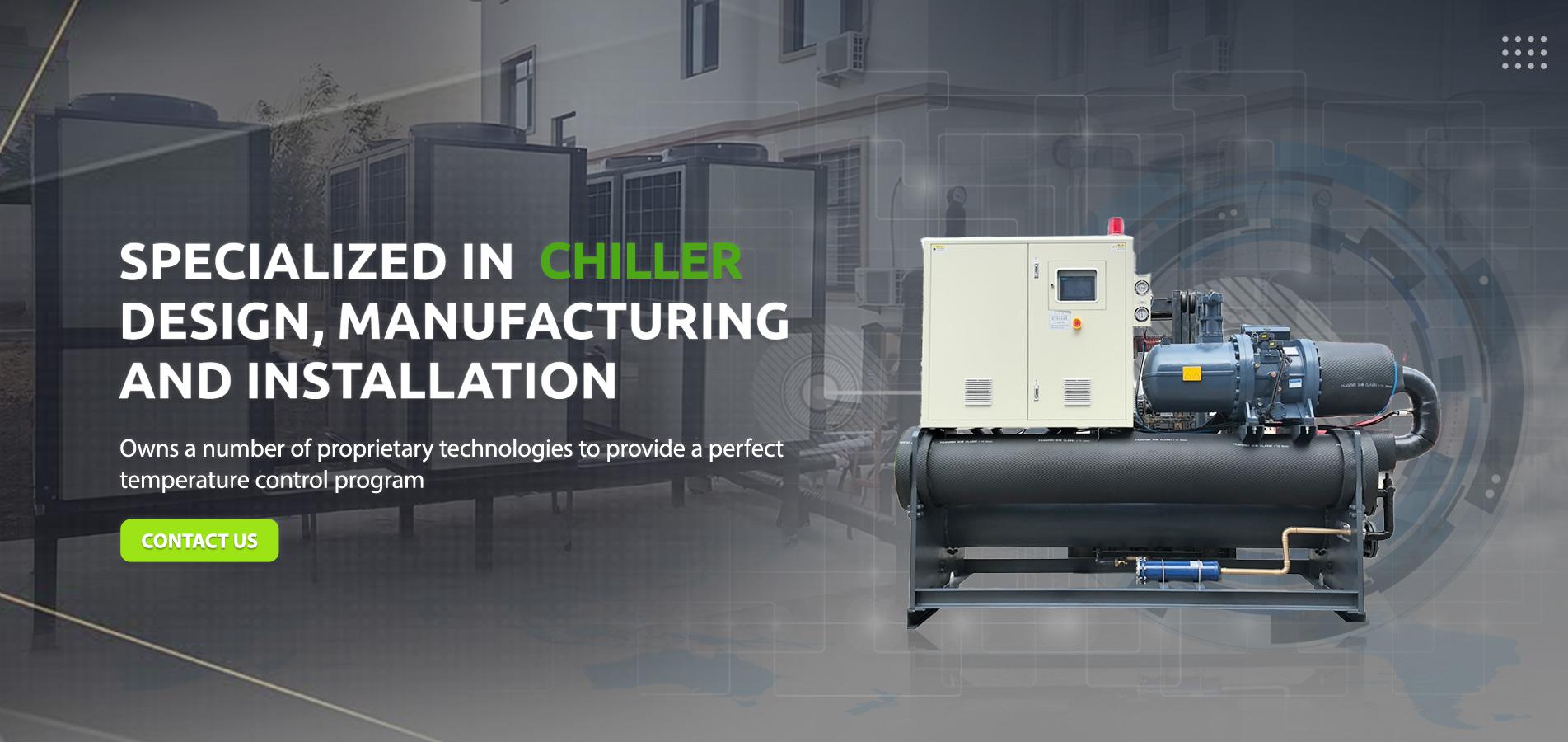
Hengde specializes in designing and manufacturing Industrial Chillers for production lines across a wide range of industries, including plastic injection molding, chemical processing, electroplating, laser equipment, food processing, and lithium battery manufacturing.
Our product range includes air-cooled chillers, water-cooled chillers, and customized industrial cooling systems. For customers requiring large cooling capacities, we also provide complete water-cooled chiller solutions designed to operate seamlessly with cooling towers, pumps, and auxiliary equipment.
Rather than simply recommending a standard model, our engineering team evaluates your cooling capacity, process temperature, installation conditions, factory layout, and future expansion plans to deliver the most suitable cooling solution for your production line.
WhatsApp : +8618351969707
Email : sales@sinohengde.com
Address : No.1 Jiangyang Line, Hongqi community, Hengxi Street,Jiangning, Jiangsu, China