When a chiller is running but fails to deliver sufficient cooling, the issue is often more complex than a simple component failure. Cooling inefficiency can stem from improper system design, refrigerant problems, or operating conditions that no longer match actual production demand.This step-by-step troubleshooting guide helps you identify the most common reasons why your chiller is not cooling—and how to resolve them effectively.
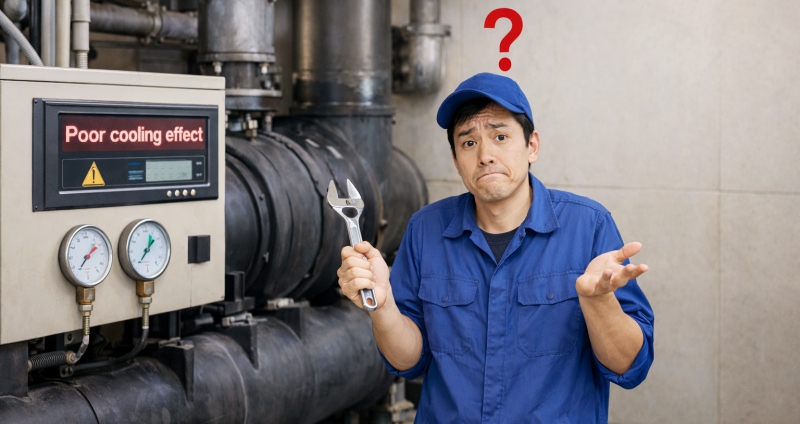
If you want a broader overview of typical chiller failures, you may also find this guide useful: What Are the Common Chiller Faults and How to Troubleshoot Them?
Step 1: Confirm Actual Cooling Demand vs. Chiller Capacity
One frequently overlooked cause of insufficient cooling is undersized chiller capacity.
As production expands or process parameters change, the original cooling load calculation may no longer be accurate. If the chiller’s cooling capacity is smaller than the real heat load, the system will operate continuously but still fail to reach the target temperature.
Typical Symptoms:
Solution:
Step 2: Check for Insufficient or Faulty Refrigerant in the System
Another critical reason a chiller cannot cool properly is insufficient refrigerant or refrigerant-related system faults.
Refrigerant leakage, incorrect charging, or internal restrictions can significantly reduce cooling efficiency even if the compressor is running normally.
Typical Symptoms:
Solution:
Step 3: Verify Heat Exchange Conditions
Poor heat dissipation can also prevent effective cooling. Dirty condensers, blocked airflow, or inadequate cooling water flow will raise system pressure and reduce cooling performance.
Key Checks:
Step 4: Review Control Settings and Operating Parameters
Incorrect temperature settings, control logic mismatches, or sensor deviations can lead to misleading performance issues.
Ensure that:
Real Case: How Hengde Helped a Customer Restore Cooling Performance
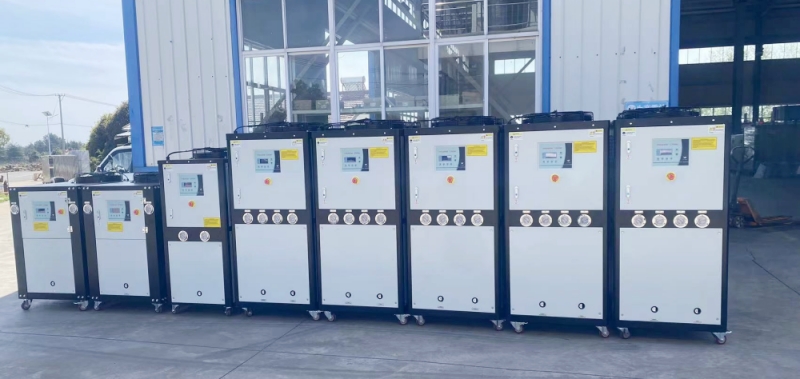
A plastics processing customer in Eastern Europe contacted Hengde after experiencing persistent cooling problems with their existing industrial chiller. The industrial chiller unit operated continuously but could not reduce mold temperature to the required level.
After reviewing the application data, Hengde engineers identified two key issues:
1.The original chiller was undersized due to increased production output
2.The refrigeration system showed signs of refrigerant leakage, reducing effective cooling capacity
Hengde recommended a properly sized chiller solution based on updated heat load calculations and assisted the customer in repairing the refrigerant system. After implementation, the cooling time stabilized, energy consumption improved, and production delays were eliminated.
Frequently Asked Questions (FAQ)
Q1: Can a chiller run normally but still fail to cool?
Yes. Undersized capacity or insufficient refrigerant can cause poor cooling even if the chiller appears to operate normally.
Q2: How do I know if my industrial chiller capacity is too small?
If the chiller runs continuously without reaching the target temperature and no faults are present, capacity mismatch is likely.
Q3: Is low refrigerant always caused by leakage?
In most cases, yes. Refrigerant does not get “used up” and low charge usually indicates leaks or improper charging.
Final Thoughts
When a industrial chiller is not cooling, the solution is rarely guesswork. By systematically evaluating cooling load, refrigerant condition, heat exchange efficiency, and control settings, most issues can be accurately identified and resolved.
If you are unsure whether your current industrial chiller capacity is sufficient or suspect refrigerant-related issues, providing application details such as industry, heat load, target temperature, voltage, and operating conditions will help professionals determine the most suitable solution.
WhatsApp : +8618351969707
Email : sales@sinohengde.com
Address : No.1 Jiangyang Line, Hongqi community, Hengxi Street,Jiangning, Jiangsu, China