
Chillers are essential in industrial, commercial, and laboratory applications, providing precise temperature control for processes, equipment, and cooling systems. However, even high quality industrial chillers can experience faults over time. Knowing the common chiller faults, their causes, and effective troubleshooting techniques can help operators minimize downtime, improve efficiency, and extend equipment lifespan.
Below is a practical guide for operators, maintenance teams, and facility managers on industrial chiller troubleshooting.
Frequently Asked Questions on Industrial Chiller Troubleshooting
Q1: My industrial chiller powers on but does not start. What could be the cause?
A: This can happen due to micro-break trips, main power switch tripping, or reverse phase protection activation. To troubleshoot:
Q2: Why does my industrial chiller trigger a high-pressure alarm?
A: High-pressure alarms can occur due to several reasons:
Q3: What causes a low-pressure alarm on my industrial chiller?
A: Common causes include:
Q4: What triggers an overload alarm?
A: Overload alarms may result from:
Q5: Why does my industrial chiller display a water flow alarm?
A: Possible reasons include:
Q6: My industrial chiller output temperature is too low. What should I do?
A: Causes may include:
Q7: The industrial chiller cooling seems weak. Why?
A: This may happen if the cooling load is too small or the system refrigerant is insufficient or faulty: Consider selecting a chiller with appropriate capacity and inspect the refrigerant system.
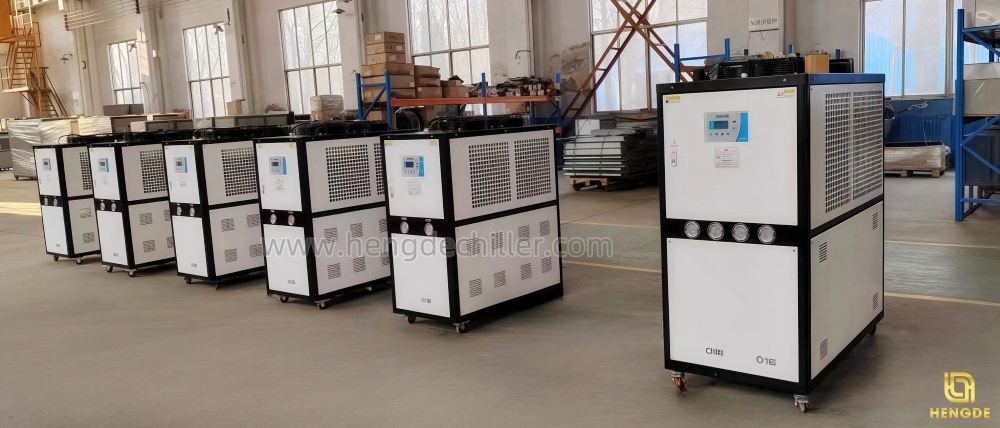
Quick Reference: Industrial Chiller Troubleshooting Table
| Status / Fault | Possible Causes | Solutions |
| Power ON, no startup | Micro-break trip | Check and confirm the fault, replace or repair |
| Main power switch tripped | 1) The power load line is grounded or short-circuited; | 1) Replace new parts; |
| 2) The compressor, water pump, or motor is grounded. | 2) Repair or replace if fault is confirmed after inspection. | |
| Reverse phase protection | 1) The compressor, water pump and fan are in reverse direction; | 1) Swap any two phases of the power supply; |
| 2) Phase loss. | 2) Use a multimeter to measure whether the three-phase voltage is normal. | |
| High pressure alarm | 1) High-voltage switch tripped. | 1) Clean the condenser, keep the air temperature below 40℃/cooling water below 35℃; |
| 2) High-voltage switch fault. | 2) Press the high pressure reset switch to restart the compressor. | |
| 3) Overfilling of refrigerant. | 3) Check whether the refrigerant charge is too much. | |
| 4) Cooling water pump fault or cooling water system fault. | 4) Repair or replace the water pump. | |
| Low pressure alarm | 1) Insufficient refrigerant or system leakage; | 1) Check if the system is short of refrigerant or if there are leaks in the system pipelines, check for leaks and repair them; |
| 2) Insufficient water flow or lack of water in the system causes the evaporator to freeze. | 2) Check if the water tank is short of water and if the valve is open to the maximum. If the evaporator is frozen, drain the water and add warm water to melt the ice. Do not hit the ice with hard objects. If the copper pipe is penetrated, the compressor will be damaged! | |
| 3) Failure of the chilled water pump or pipe blockage. | 3) Check the chilled water pump and pipeline system. | |
| Overload alarm | 1) Abnormal voltage; | 1) Check and repair the unstable voltage and missing phase of the three-phase power supply; |
| 2) Faulty water pump or compressor; | 2) Repair or replace; | |
| 3) Overload relay setting is too low or damaged; | 3) Re-adjust the current value or replace; | |
| 4) Line contacts are poor or loose. | 4) Re-tighten the screws. | |
| Water flow alarm | 1) There is air in the water pump and it does not drain water or it is damaged; | 1) Drain or replace the water pump; |
| 2) The water system filter is clogged. | 2) Clean the water filter; | |
| 3) The system is short of water or the pipeline is damaged. | 3) Check and repair. | |
| Output temp too low | 1) The water temperature setting value is too low; | 1) Reset the temperature value; |
| 2) The water temperature probe is open or short-circuited | 2) Check the probe and replace it. | |
| Cooling weak | 1) The cooling load of the unit is too small; | 1) Reselect a chiller with appropriate capacity; |
| 2) The system refrigerant is insufficient or faulty. | 2) Check the system and repair it. |
Note: For safety and optimal performance, industrial chiller maintenance and repairs should always be performed by qualified professionals. Regular industrial chiller inspections and preventive servicing reduce risks of faults and extend system life. For more industrial chiller maintenance methods, please refer to: How To Maintenance The Industrial Chiller
About NANJING HENGDE ELECTRICAL EQUIPMENT CO., LTD
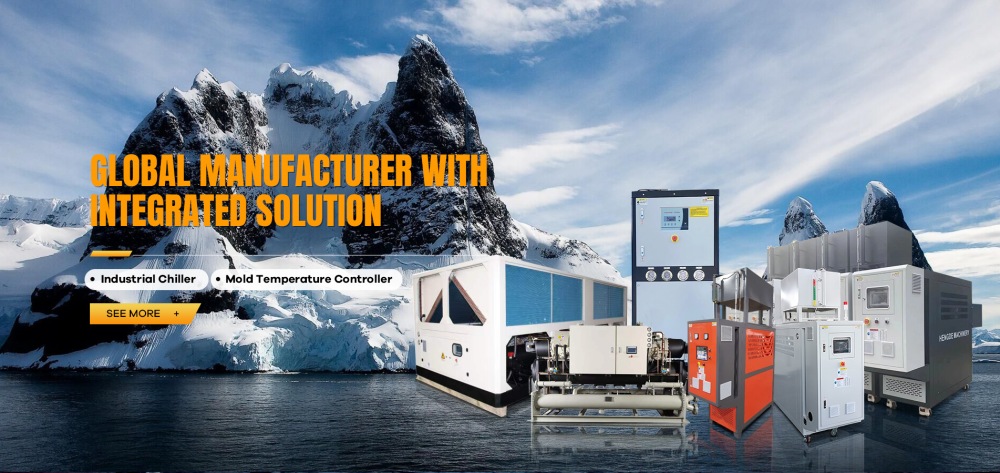
NANJING HENGDE ELECTRICAL EQUIPMENT CO., LTD is a trusted professional in the Industrial Chiller field, specializing in designing and manufacturing high-quality chillers for various industrial applications. With over 20 years of experience, Hengde provides reliable temperature control solutions, including water chillers, air chillers , mold temperature machines, and customized systems to meet the needs of factories worldwide. Their expertise ensures efficient, durable, and safe operation for all industrial cooling requirements.
WhatsApp : +8618351969707
Email : sales@sinohengde.com
Address : No.1 Jiangyang Line, Hongqi community, Hengxi Street,Jiangning, Jiangsu, China