In many industrial processes such as coatings, resins, battery slurry production, and fine chemicals, temperature control during grinding and mixing is not just a supporting function—it directly affects product quality and process stability.
When materials are processed in grinder mixing tanks, heat is continuously generated due to high-speed agitation and friction. If this heat is not properly controlled, it can lead to unstable viscosity, particle agglomeration, or even material degradation.
This is where temperature control units (TCUs), also known as chiller-heater units or heat-cool integrated systems, become essential.
1. Why Temperature Control Matters in Grinder Mixing Tanks
During grinding and dispersion, energy input is converted into heat. For many sensitive materials, even a small temperature fluctuation can change the final result.
Typical issues caused by poor temperature control include:
To avoid these problems, manufacturers integrate external temperature control systems connected to the mixing tank jacket or coil.
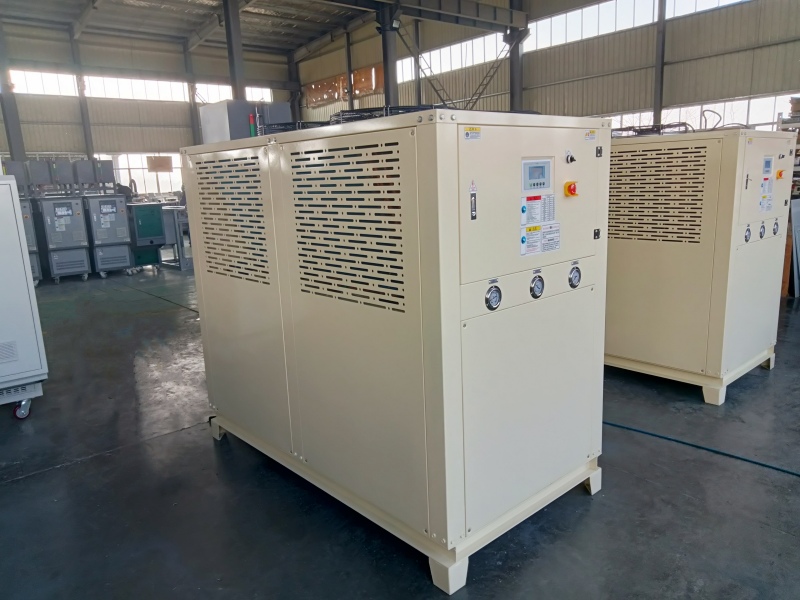
2. How the Temperature Control Unit Works
The system operates in a closed loop using a heat transfer medium (water, oil, or glycol).
It has three basic functions:
(1) Heating:
Electric heaters or heat pumps increase the fluid temperature and transfer heat into the tank when required.
(2) Cooling:
A refrigeration circuit lowers the fluid temperature to absorb excess heat from the mixing process.
(3) Circulation:
A pump continuously moves the fluid between the temperature control unit and the tank jacket, ensuring stable heat exchange.
Instead of manual switching, the system automatically responds to real-time temperature changes.
3. Control System and Stability
Modern systems are usually controlled by PLC with PID regulation.
A temperature sensor installed in the tank sends continuous feedback to the controller. Based on the deviation from the set value, the system adjusts heating power or cooling capacity automatically.
In most industrial applications, temperature stability can reach around ±0.5°C, depending on system design and load conditions.
4. Typical Applications in Grinding Processes
(1) Cooling during grinding
This is the most common requirement. It is used in:
The goal is to prevent overheating caused by mechanical energy.
(2) Heating during processing
Some materials need controlled heating for:
(3)Multi-stage temperature control
Some processes require both heating and cooling in sequence, for example:
5. Advantages of Integrated Chiller-Heater Systems
Compared with separate heating and cooling equipment, integrated systems offer several advantages:
Compact design: one system replaces two
Faster response: direct jacket heat exchange
Better stability: automatic switching between modes
Lower energy waste: optimized thermal balance
Clean operation: closed-loop system avoids contamination
This is especially important in industries with strict quality requirements like pharmaceuticals and electronics materials.
6. Selection Points
When choosing a system for grinder mixing tanks, engineers usually focus on:
Proper sizing is critical—an undersized system will lead to unstable temperature, while oversizing increases cost and energy use.
7. Hengde Project Case: Heat-Cool Integrated Units
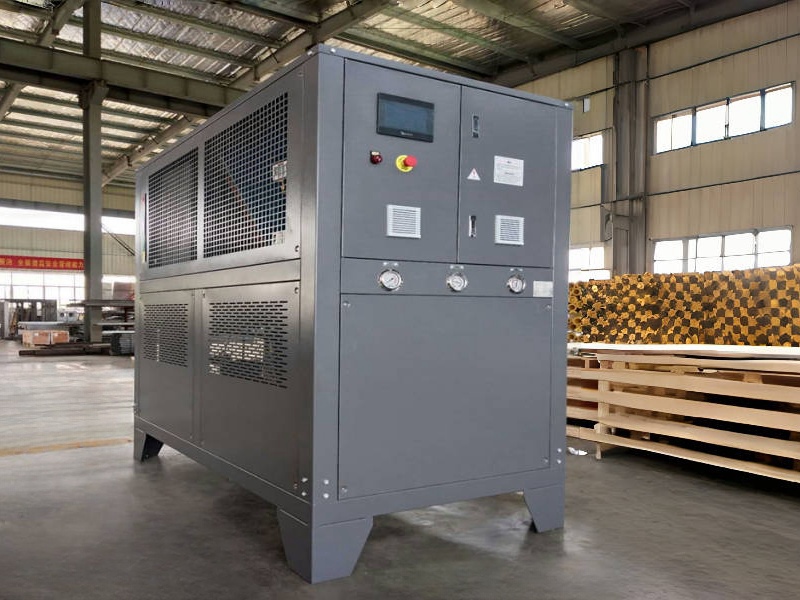
A real project from NANJING HENGDE ELECTRICAL EQUIPMENT CO., LTD shows how this system is applied in practice. In the case titled “3 Units Of Heat-Cool Integrated Units Ready For Shipment”, three sets of integrated temperature control units were delivered for a grinder mixing application. The customer’s process required:
Solution provided by Hengde
Hengde supplied customized heat-cool integrated systems with:
After commissioning, the system helped achieve:
8. Final Thoughts
In grinder mixing applications, temperature control is often the difference between a stable process and an unstable one.
Chiller-heater units provide a practical way to manage both heat generation and process requirements in a single system. They are not just auxiliary equipment, but an important part of process control.
With increasing demands for precision in materials like battery slurry, coatings, and advanced chemicals, integrated temperature control systems are becoming a standard configuration rather than an optional upgrade.
WhatsApp : +8618351969707
Email : sales@sinohengde.com
Address : No.1 Jiangyang Line, Hongqi community, Hengxi Street,Jiangning, Jiangsu, China